Connect this guide with the rest of your visit in the Lagos trip planner. Read how the research is made and what its sources establish.
At a glance
Start here
- Choose LCC for a large established reserve focused on Lekki Peninsula biodiversity.
- Choose LUFASI for an urban forest, environmental education and animal rehabilitation context.
- Ask the operator about current access, route condition and group requirements.
- Treat wildlife encounters as possible observations, never guaranteed entertainment.
01
Start with the institution's purpose
NCF says Lekki Conservation Centre was established in 1990, is wholly owned by the foundation and occupies 78 hectares in Lekki. Its description foregrounds ecotourism, reforestation and native biodiversity. That makes LCC the stronger fit when your central question is how a sizeable protected area preserves a representative part of the peninsula's natural environment inside a growing metropolis.
LUFASI began in 2013 as the Lekki Urban Forestry and Animal Shelter Initiative. Its stated mission combines native urban biodiversity, environmental learning, recreation and a sanctuary for injured or abandoned animals. Choose it when you want to understand how a smaller urban forest connects public education, habitat care and rehabilitation rather than simply seeking a long walk.
- Write one learning goal before choosing.
- Do not select by social-media spectacle alone.
- Use the organisation's own terminology when explaining the visit to children.
02
Compare the shape of the experience
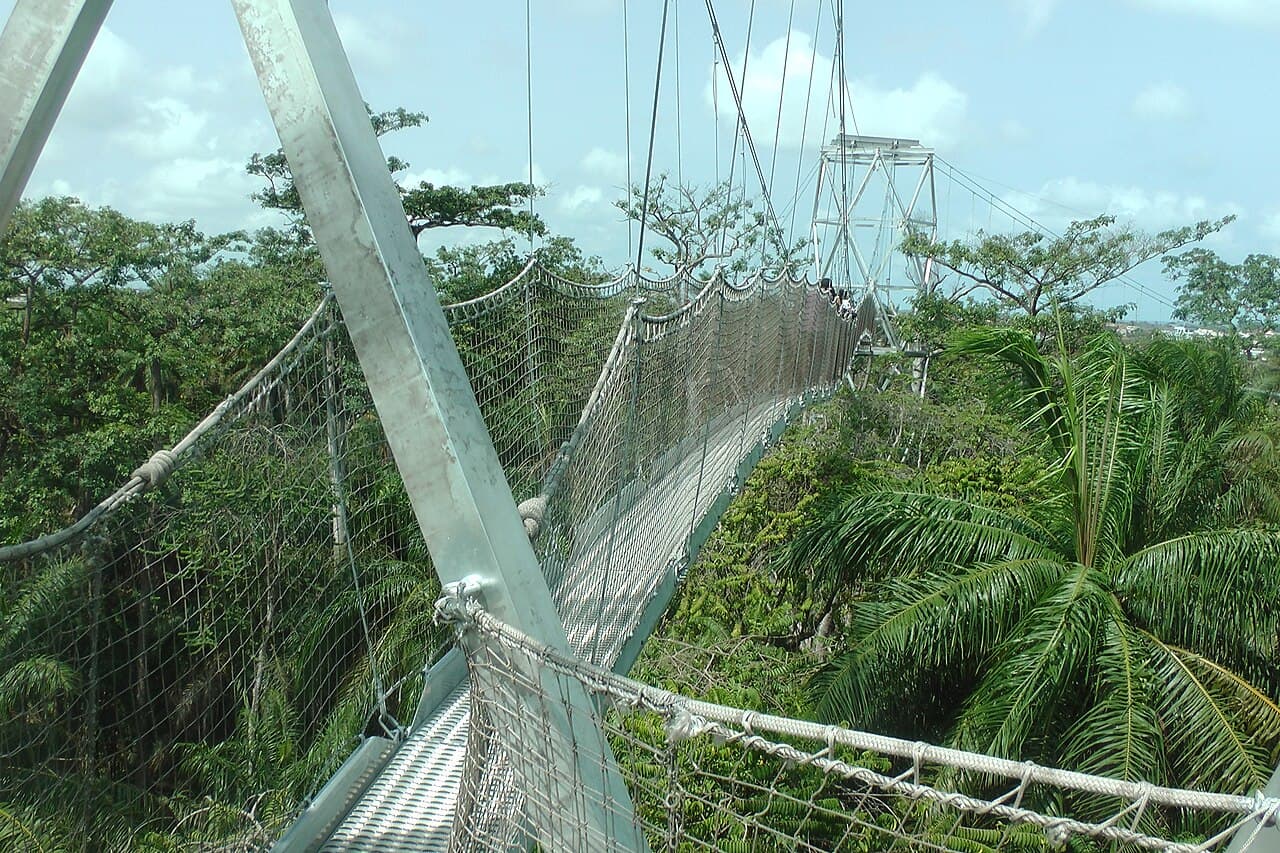
The NCF page establishes LCC's scale and conservation role but does not guarantee that every promoted feature is available on the day you arrive. Build the visit around observation of habitat and interpretation. If a canopy route or other optional element is closed, the reserve's ecological purpose has not disappeared; let staff redirect the visit rather than treating one feature as the whole product.
LUFASI's official park page lists a forest tour, eco hall, children's play area, animal rehabilitation centre, lakes, sports areas and picnic spaces. That range can suit a mixed-interest group, but a listed amenity is not a current operating promise. Ask which parts are open, which require advance arrangements and what conduct is expected near animals and forest plots.
- Ask what is open on your date.
- Separate core habitat learning from optional facilities.
- Accept an operator's closure without seeking an unofficial route.
03
Use the conservation operator's contact route
NCF publishes a dedicated telephone number and email address for LCC facility enquiries and booking, plus a separate contact for school visits and educational programmes. Use those details to ask about individual access, group size, footwear, current trail conditions and any age or mobility considerations. A third-party ticket listing cannot answer site-condition questions with the same authority.
LUFASI's official pages explain the organisation and park but do not provide a dependable current price or complete visitor timetable in the pages reviewed. Contact LUFASI directly through its current official site before setting out. Record who confirmed the visit and what was included, while recognising that weather or animal-care needs can still change the plan.
- Name the date and number of visitors.
- Mention children, older visitors or mobility limits when asking about routes.
- Confirm what the booking covers without copying an old price.
04
Look for systems, not a sighting checklist
A useful conservation visit asks how forest, wet ground, water, plants and animals depend on one another. NCF presents LCC as a reforestation and native-biodiversity project. LUFASI says its forest programme protects indigenous forest, surveys biodiversity, maintains a plant nursery and works on urban afforestation. Those institutional tasks are more reliable learning anchors than a promise to see a particular species.
Pause at interpretation points, keep voices moderate and remain on authorised paths. Never feed, touch or call wildlife closer. If no animal appears, observe vegetation layers, water movement, leaf litter, signs of human pressure and the design of the visitor route. A quiet hour of careful looking is not a failed visit.
- Notice habitat transitions and planted areas.
- Ask staff which restoration work visitors can see without disturbing it.
- Leave plant material, feathers and soil where they are.
05
Treat sanctuary animals as patients, not props
LUFASI describes its animal shelter as part of a wider conservation and education mission. The presence of rehabilitating or permanently sheltered animals does not create an entitlement to close contact. Follow staff boundaries, avoid flash or noise, and do not interpret resting, hiding or restricted access as poor visitor service.
Ask children to frame questions around habitat, rescue and responsible human behaviour. Do not request feeding, touching or a posed photograph unless the organisation explicitly offers and supervises it on the day. The ethical value of a sanctuary lies in care and public learning; visitor entertainment comes second.
- Keep hands outside barriers.
- Ask before any photography.
- Let staff decide when an animal needs distance.
06
Pack for a low-impact visit
Wear closed, secure footwear appropriate to an outdoor route and carry rain protection that does not need to be discarded. Bring drinking water in a reusable bottle if the operator permits it, and take every item out with you. Avoid perfume, speakers, drones and professional equipment unless current site rules explicitly allow them.
Schedule one conservation centre for the day rather than racing between both. Their value lies in attention, interpretation and support, not comparison photographs. If the operator advises postponement, use the time for an indoor cultural institution and return only after receiving fresh confirmation.
- Choose muted clothing and secure shoes.
- Carry out all litter.
- Keep the programme short enough for the least mobile member of the group.
Useful answers
Reader questions
Is LCC the same organisation as LUFASI?
No. Lekki Conservation Centre is an NCF project, while LUFASI is the Lekki Urban Forestry and Animal Shelter Initiative with its own nature park, forest and sanctuary mission.
Sources: Nigerian Conservation Foundation; LUFASICan I rely on seeing monkeys or other wildlife?
No sighting should be treated as guaranteed. Visit for habitat and conservation learning, keep to staff guidance and allow wild or rehabilitating animals to remain distant.
Sources: Nigerian Conservation Foundation; LUFASIHow do I arrange an LCC school visit?
NCF's contact page publishes a specific educational-programmes and school-visits contact. Use the current page and describe the group, date, ages and learning needs.
Sources: Nigerian Conservation FoundationDoes LUFASI offer more than a forest walk?
Its official park page lists environmental-learning, animal-rehabilitation, play, sport and picnic facilities, but visitors should confirm which elements are operating on their date.
Sources: LUFASIRead the evidence
Sources and further reading
These sources support the relevant sections above. Plans and comparisons are editorial suggestions. Check operators for current arrangements.
- Our Centers ↗Nigerian Conservation Foundation · Research date 14 September 2026
LCC's 1990 establishment, 78-hectare scale, ownership, reforestation role and native-biodiversity focus.
- Contact Us ↗Nigerian Conservation Foundation · Research date 14 September 2026
Current LCC facility-booking and educational-programme contact routes and location.
- Lufasi Nature Park ↗LUFASI · Research date 14 September 2026
The park's 20-hectare farm-forest setting, education and rehabilitation purpose, and listed facilities.
- About Lufasi ↗LUFASI · Research date 14 September 2026
LUFASI's 2013 origin, mission, urban-biodiversity goals, environmental education and animal-sanctuary role.
- FOREST CONSERVATION ↗LUFASI · Research date 14 September 2026
The indigenous-forest programme, biodiversity surveys, nursery, afforestation and named conservation priorities.